Silk vs Chanderi vs Georgette vs Organza vs Linen Kurtas
The best kurta fabric depends on your occasion, climate, and personal style. Silk and Organza suit formal weddings and evening events; Chanderi and Georgette work beautifully for festive daywear; Linen is the go-to for comfort-first dressing. Each fabric carries distinct embroidery compatibility and seasonal advantages worth knowing before you shop.
Choosing a kurta should feel effortless. But once you start shopping, the fabric question hits fast and it matters more than most men realize. The right fabric determines how your outfit photographs at a reception, whether you're comfortable through a four-hour Mehndi ceremony, and how well the embroidery holds its shape over time.
This guide covers five of the most popular kurta fabrics Silk, Chanderi, Georgette, Organza, and Linen broken down across five key criteria: look, comfort, season-suitability, embroidery compatibility, and best occasions. Whether you're dressing for a destination wedding, a festive Diwali celebration, or a daytime Haldi function, this comparison will help you make a confident, informed choice.
Kasbah's designer kurta collection spans all of these fabrics, so consider this your fabric roadmap before you browse.
Silk Kurtas: Timeless Luxury With Commanding Presence
How does a silk kurta look and feel?
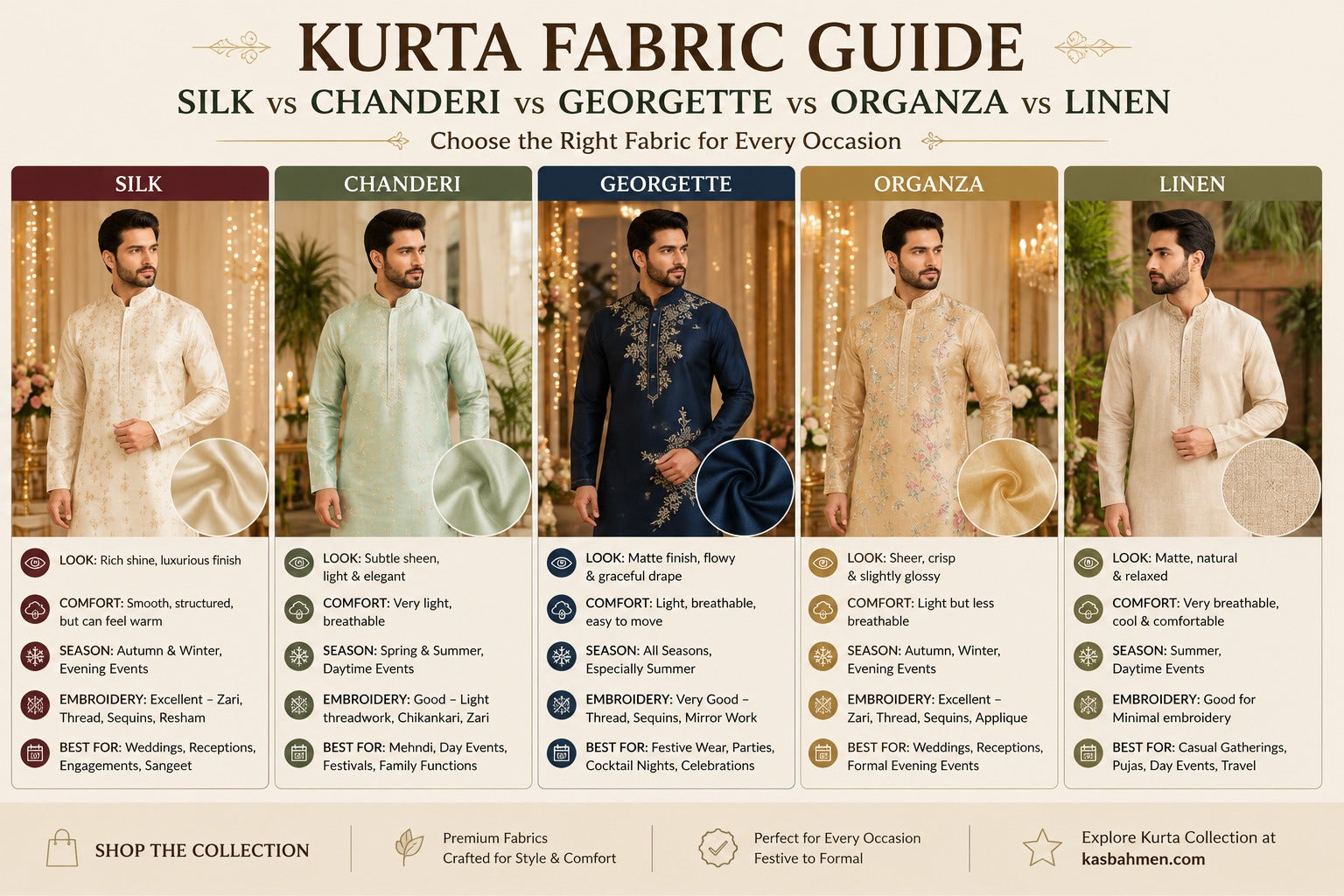
Silk carries an unmistakable visual weight. The natural sheen catches light in a way that no synthetic fabric can replicate, giving silk kurtas a rich, luminous finish that reads as formal and refined. On the body, silk drapes with a smooth fluidity structured enough to hold a silhouette, graceful enough to move beautifully.
That said, silk is not the most forgiving fabric in heat. It can feel warm in peak summer conditions and is best reserved for air-conditioned venues or cooler evening settings.
Season suitability: Autumn and winter weddings, evening receptions, and indoor celebrations. Silk tends to be too warm for peak summer or outdoor daytime events.
Embroidery compatibility: Exceptional. Silk's tight, smooth weave provides a stable base for zari work, thread embroidery, sequin detailing, and intricate resham embroidery. Heavy embellishments sit cleanly on the surface without distorting the fabric.
Best occasions: Wedding receptions, engagement ceremonies, formal Sangeet nights, and high-profile festive gatherings. A silk kurta commands a room it's the fabric of choice when the event calls for genuine grandeur.
Kasbah's sherwanis and bandhgalas frequently feature silk as a base fabric for exactly this reason.
Chanderi Kurtas: Lightweight Elegance With Heritage Appeal
What makes Chanderi fabric unique for kurtas?
Chanderi is woven in Chanderi, Madhya Pradesh, and has been a staple of Indian textile heritage for centuries. The fabric blends cotton or silk with a fine warp to produce a semi-transparent, featherweight cloth that carries subtle natural sheen without the heaviness of pure silk.
Visually, Chanderi reads as soft and understated. Its gentle lustre makes it an ideal choice for daytime events where you want to look polished without appearing overdressed. The fabric has an airy quality that photographs beautifully in natural light.
Season suitability: Spring and summer events, daytime weddings, and festive occasions in warmer climates. Chanderi's breathability makes it far more comfortable than silk in heat, while still maintaining a refined appearance.
Embroidery compatibility: Good, with some nuance. Chanderi handles lighter embroidery well chikankari, delicate threadwork, and subtle zari borders all work beautifully. Very heavy embellishments can strain the fabric's fine weave, so it's better suited to moderate embroidery rather than dense, all-over designs.
Best occasions: Mehndi ceremonies, daytime receptions, family celebrations, and festive occasions like Eid or Diwali. Chanderi strikes the ideal balance between heritage and comfort for events that last several hours outdoors or in semi-open venues.
Kasbah's chikankari kurtas showcase Chanderi and similarly lightweight fabrics paired with traditional Lucknow embroidery a combination that never goes out of style.
Georgette Kurtas: Fluid, Versatile, and Effortlessly Modern
Is Georgette a good fabric choice for men's kurtas?
Georgette is a crepe-textured fabric with a slightly matte finish and excellent drape. Unlike silk, it doesn't carry a prominent sheen, which makes it more versatile across different occasions and times of day. The crinkled texture gives Georgette a subtle visual depth that pairs well with both minimalist and embellished designs.
Comfort-wise, Georgette is lighter than silk and moves freely with the body, which makes it a practical choice for long events where you'll be standing, dancing, or moving between venues.
Season suitability: Year-round. Georgette is one of the most seasonally adaptable kurta fabrics breathable enough for warmer months, layerable enough for cooler evenings.
Embroidery compatibility: Very good. Georgette holds zari work, sequin embroidery, and thread detailing particularly well. The slightly textured surface gives embroidered motifs excellent grip, allowing intricate designs to stand out clearly. Kasbah's Black Georgette Zari Work Short Kurta is a strong example of how this fabric elevates detailed embellishment.
Best occasions: Sangeet nights, cocktail parties, pre-wedding functions, and festive celebrations. Georgette's fluid movement makes it an excellent choice for events that combine socializing with dancing, where comfort and style need to coexist.
Organza Kurtas: Sheer Drama for the Confident Dresser
What is Organza fabric and how does it work in kurta styling?
Organza is a crisp, sheer, lightweight fabric with a fine, stiff weave. It's translucent by nature, which gives Organza kurtas a layered, see-through effect that has become increasingly fashionable in contemporary men's ethnic wear. The fabric holds its shape well without being heavy, creating structured silhouettes that feel modern and editorial.
Organza sits apart from the other fabrics on this list because of its sheer aesthetic. Wearing an Organza kurta is a deliberate style choice it signals confidence and fashion-forwardness, making it particularly suited to men who want their outfit to start conversations.
Season suitability: Spring and summer, and for indoor evening events year-round. Organza's sheerness makes it less practical for cold weather unless layered over a base kurta or inner garment.
Embroidery compatibility: Strong for delicate work. Chikankari and fine threadwork sit beautifully on Organza, as the sheer base allows the embroidery to appear almost suspended. Heavy embellishments can weigh down the fabric and disrupt its characteristic lightness, so lighter hand embroidery tends to work best.
Kasbah's Blue Organza Chikankari Short Kurta demonstrates how well fine embroidery translates on this sheer fabric.
Best occasions: Fashion-forward weddings, cocktail events, destination celebrations, and daytime festive functions where personal style takes center stage. Organza is also increasingly popular for Mehndi ceremonies and resort-style weddings.
Linen Kurtas: Effortless Comfort That Never Looks Casual
Is Linen a good fabric for ethnic wear and kurtas?
Linen is the most practical fabric on this list. Woven from flax plant fibers, linen is highly breathable, moisture-wicking, and grows softer with each wash. Visually, linen has a natural, slightly textured surface with an understated matte appearance that reads as relaxed elegance rather than formal grandeur.
Linen kurtas have seen a significant rise in popularity for outdoor and destination weddings, particularly in coastal or tropical settings where heavier fabrics become uncomfortable within minutes. A well-cut linen kurta in a neutral or earthy tone can look effortlessly sharp while keeping you genuinely comfortable throughout the day.
Season suitability: Summer and monsoon seasons are where Linen excels. It handles heat and humidity better than any other fabric on this list, making it the clear choice for outdoor events, beach weddings, and tropical destinations.
Embroidery compatibility: Moderate. Linen handles simple embroidery block printing, minimal threadwork, and basic geometric embellishments well. However, dense embroidery can feel stiff on linen's natural texture, and the fabric's casual character is better complemented by lighter design detailing rather than heavy zari or mirror work.
Best occasions: Haldi ceremonies, outdoor Mehndi functions, destination weddings, beach celebrations, and casual festive gatherings. Linen is also increasingly relevant for daytime events where you need to remain comfortable across several hours.
Kasbah's Haldi outfits for men often feature lighter fabrics like linen and Chanderi to suit the relaxed, outdoor spirit of the ceremony.
Fabric Comparison at a Glance
|
Fabric |
Look |
Comfort |
Best Season |
Embroidery |
Best Occasion |
|
Silk |
Rich, lustrous |
Moderate |
Autumn/Winter |
Excellent |
Receptions, formal events |
|
Chanderi |
Soft sheen, delicate |
High |
Spring/Summer |
Moderate |
Mehndi, daytime weddings |
|
Georgette |
Fluid, matte |
High |
Year-round |
Very good |
Sangeet, cocktail, festive |
|
Organza |
Sheer, structured |
High |
Spring/Summer |
Good (light work) |
Fashion-forward, cocktail |
|
Linen |
Natural, textured |
Very high |
Summer/Monsoon |
Moderate |
Outdoor, Haldi, destination |
How to Choose the Right Kurta Fabric for Your Next Event
The fabric decision rarely comes down to one factor alone. Here's how to think about it:
Choose Silk if the event is formal, indoor, and you want your outfit to reflect occasion-appropriate grandeur. Silk is the strongest choice for grooms and close family members at evening receptions or wedding ceremonies.
Choose Chanderi if you're attending a daytime function in a warm climate and want heritage-inspired elegance without the weight. It's particularly effective when paired with chikankari embroidery.
Choose Georgette if you want maximum versatility a fabric that works across seasons, holds embroidery well, and moves comfortably through a full evening of celebration.
Choose Organza if personal style is your priority and the event has room for experimentation. Organza rewards confidence and pairs particularly well with minimalist or fine hand embroidery.
Choose Linen if comfort is non-negotiable and the setting is outdoor, tropical, or relatively casual. Linen photographs well in natural light and ages gracefully through long events.
For events that span multiple functions say, a Mehndi followed by a reception consider selecting different fabrics for each: a Chanderi or Linen kurta for the daytime ceremony, and a Silk or Georgette kurta for the evening. Kasbah's designer short kurtas and kurta with stole sets make it easy to build a cohesive multi-function wardrobe without starting from scratch each time.
The Right Fabric Makes the Outfit
Fabric is the foundation of everything. Cut, embroidery, and color all matter but the right fabric is what determines how an outfit actually lives and breathes on your body across a full day of celebration.
Silk offers ceremonial authority. Chanderi brings heritage lightness. Georgette delivers fluid, all-season versatility. Organza opens the door to contemporary, fashion-forward styling. Linen keeps you comfortable when the temperature climbs and the function runs long.
Each has its place in a well-considered ethnic wardrobe. The question is which one suits your next occasion and now you have the information to answer that confidently.
Explore Kasbah's new arrivals to find designer kurtas across all five fabrics, crafted with expert tailoring and premium embroidery for men who take their ethnic wear seriously.
Frequently Asked Questions
Which kurta fabric is best for a summer wedding?
Chanderi and Linen are the most comfortable choices for summer weddings, particularly for outdoor or daytime events. Both fabrics are breathable and lightweight. Georgette is a strong option for indoor evening events in summer, as it drapes well without feeling heavy.
Can you wear a Silk kurta to a daytime function?
Silk kurtas are generally better suited to evening events and air-conditioned venues. In daytime summer settings, Silk can feel uncomfortably warm. Chanderi or Georgette will deliver a similarly polished look with significantly better comfort in daylight hours.
Which fabric holds zari embroidery the best?
Silk holds zari embroidery most effectively, followed closely by Georgette. Both fabrics provide a stable base that allows metallic threadwork to sit cleanly and maintain its structure over time. Chanderi is suitable for lighter zari borders, but is less ideal for dense, all-over zari designs.
Is Organza only suitable for modern or experimental ethnic wear styles?
Not exclusively, but Organza's sheer quality does lend itself to more fashion-forward silhouettes. It works particularly well for chikankari kurtas and minimalist designs where the embroidery is meant to float visually on the fabric. It's growing in popularity for Mehndi and destination wedding contexts.
What is the most versatile kurta fabric across different occasions?
Georgette is the most versatile option. It performs well in multiple seasons, holds a wide range of embroidery styles effectively, and transitions comfortably from daytime functions to evening celebrations. For men who want one fabric that works across the most occasions, Georgette is the strongest all-rounder.
Does Linen work for formal ethnic wear, or is it too casual?
Linen can work for semi-formal occasions when styled intentionally a well-cut linen kurta in a deep or neutral tone with minimal embroidery reads as smart and refined rather than casual. For high-formality events like wedding receptions, Silk or Georgette remain the stronger choices.
How should I care for embroidered kurtas in delicate fabrics like Organza or Chanderi?
Delicate fabrics like Organza and Chanderi should ideally be dry-cleaned, particularly when embroidered. Hand washing in cold water with a mild detergent is acceptable for lightly embellished pieces, but machine washing is not recommended for any embroidered ethnic wear. Store flat or gently folded to preserve the fabric's structure and embroidery integrity.