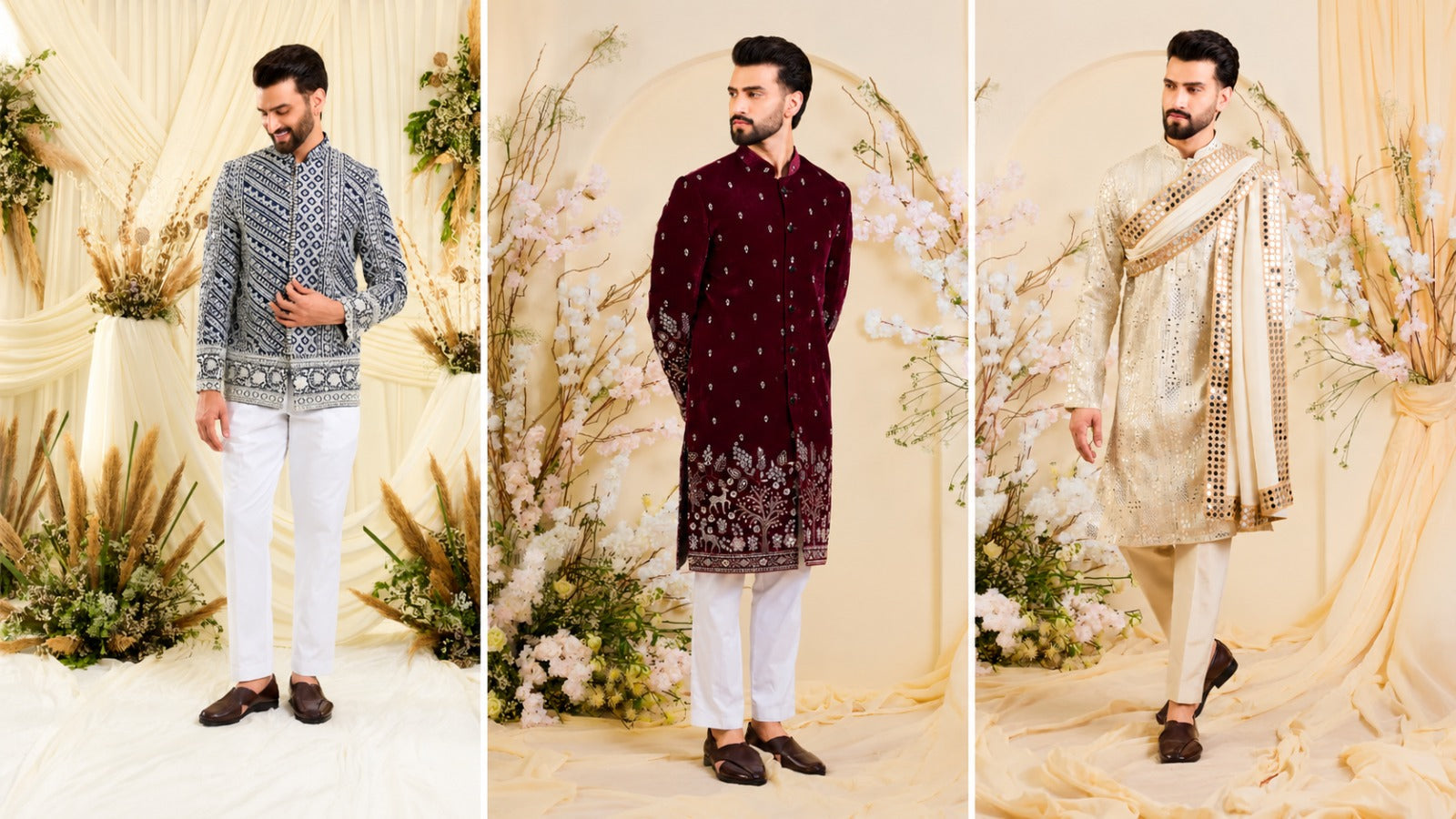
Sherwani vs Bandhgala vs Indo-Western: Which Should the Groom Wear?
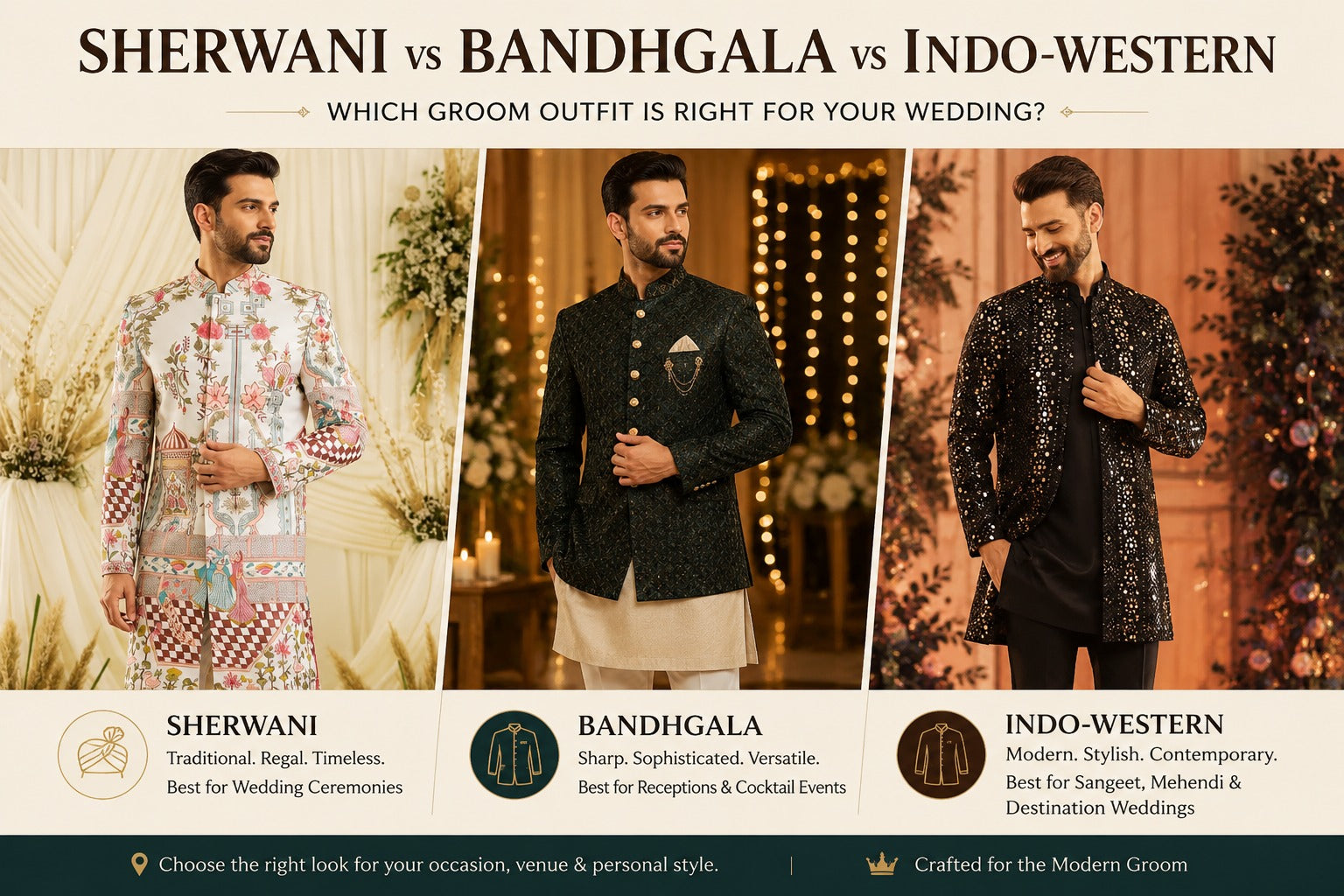
The right groom outfit depends on the ceremony, venue, and personal style. A sherwani suits traditional wedding ceremonies, a bandhgala works best for receptions and cocktail functions, and an indo-western look is ideal for destination or contemporary weddings. Each silhouette serves a distinct purpose.
Choosing a groom outfit is rarely as simple as picking a color. Between the sherwani's grandeur, the bandhgala's tailored sophistication, and the indo-western's relaxed modernity, the decision involves weighing formality, venue, body type, and how many functions you're dressing for.
This guide breaks down all three styles side by side so you can make a confident, informed choice before you ever step into a fitting room.
What Is a Sherwani, and Who Is It Best For?
A sherwani is a long, structured coat-style garment that typically falls below the knee. Traditionally worn with a churidar or straight-cut pyjama, it features rich embroidery, heavy fabric, and ceremonial detailing. The silhouette is regal, upright, and unmistakably bridal.
Sherwanis are most commonly made from brocade, raw silk, velvet, or jacquard. The embroidery whether zari, zardozi, or threadwork tends to be concentrated at the collar, chest, and hem. For grooms, this level of embellishment communicates occasion seriousness in a way no other silhouette does.
Sherwani is the best choice if:
-
You're the groom at a traditional wedding ceremony (nikah, pheras, or anand karaj)
-
The event is formal and held indoors
-
You want a look that reads unambiguously bridal
-
Your wedding photographs will be styled around heirloom aesthetics
Sherwani may not be ideal if:
-
The wedding is outdoors in a warm climate
-
You want to rewear the outfit at future events
-
You prefer a lighter, more relaxed silhouette
Kasbah's designer sherwanis and bandhgalas are crafted with premium fabrics and made-to-measure options, ensuring the fit matches the occasion's gravity.
What Is a Bandhgala, and When Should a Groom Wear One?
A bandhgala sometimes called a Nehru jacket or closed-collar jacket is a shorter, structured jacket typically worn over a kurta or shirt. Unlike the sherwani, the bandhgala stops at the hip or just below the waist, creating a cleaner, sharper silhouette.
The bandhgala works across multiple fabric choices: textured wool blends for winter receptions, silk for festive events, and cotton-based options for warmer climates. The collar is mandarin-style (closed, without lapels), giving it a distinctly South Asian identity while remaining visually modern.
Bandhgala is the best choice if:
-
You're dressing for a cocktail party, reception, or engagement ceremony
-
You want a formal look that's lighter than a full sherwani
-
You'll be attending multiple functions and want versatility
-
You prefer a silhouette that photographs well in both indoor and outdoor settings
Bandhgala may not be ideal if:
-
Your wedding ceremony calls for traditional bridal grandeur
-
You want maximum embellishment and embroidery coverage
What Is Indo-Western, and Is It Right for a Wedding?
Indo-western is less a single garment than a design philosophy it blends elements of South Asian ethnic wear (fabrics, motifs, silhouettes) with Western tailoring cues (cuts, lengths, layering). For grooms, this often means a longline draped jacket, a structured short kurta with tailored trousers, or a cape layered over slim-fit pants.
The category is intentionally flexible. An indo-western groom look might feature a heavily embroidered short kurta with cigarette trousers and a structured shrug. Or it might be a minimalist jacket-set with subtle Kashmiri embroidery and leather-detail accents.
Indo-western is the best choice if:
-
Your wedding is a destination, beach, or garden celebration
-
The ceremony is contemporary or interfaith
-
You want to look distinct without the full formality of a sherwani
-
You're dressing for a Mehendi, Sangeet, or cocktail function with a fashion-forward crowd
Indo-western may not be ideal if:
-
The wedding follows strict traditional protocols
-
Families expect conventional bridal attire
Kasbah's designer ethnic jackets and shrugs offer a strong starting point for building a modern indo-western look, paired naturally with ethnic trousers for a balanced finish.
Sherwani vs Bandhgala vs Indo-Western: Side-by-Side Comparison
|
Feature |
Sherwani |
Bandhgala |
Indo-Western |
|
Length |
Below knee |
Hip to waist |
Varies (short to longline) |
|
Formality |
Highest |
High |
Moderate to high |
|
Best occasion |
Wedding ceremony |
Reception, cocktail |
Destination, Sangeet, cocktail |
|
Fabric options |
Silk, brocade, velvet |
Wool, silk, cotton |
Mixed (silk, georgette, etc.) |
|
Rewearability |
Low |
Moderate |
High |
|
Body type |
Suits most; lengthens the frame |
Flatters lean and athletic builds |
Highly adaptable |
|
Embellishment |
Heavy |
Moderate |
Light to moderate |
How to Choose by Wedding Function
Most grooms today attend four or more functions across a wedding weekend. Wearing the same style to every event is neither practical nor expected. Here's how to map each silhouette to each function:
What should the groom wear to the wedding ceremony?
A sherwani remains the most appropriate choice for the primary wedding ceremony, regardless of religion or region. Its length, embellishment, and fabric weight communicate the gravity of the moment. Choose ivory, cream, gold, or rich jewel tones (royal blue, emerald, or wine) depending on your wedding's color palette.
What should the groom wear to a reception?
A bandhgala excels here. The silhouette is formal enough for a seated reception dinner but lighter and more comfortable for extended wear. Pair it with tailored churidar or straight-cut trousers and minimal accessories to let the jacket's structure speak for itself.
What should the groom wear to a Mehendi or Sangeet?
This is where indo-western and short kurta combinations shine. Opt for a mirror work kurta or a chikankari kurta in a vibrant or pastel shade. These lighter options allow movement, stay visually interesting under event lighting, and don't compete with the bride's Mehendi look.
For Haldi specifically, festive haldi outfits for men in yellows and bright festive shades are the most contextually appropriate choice.
How Does Body Type Affect Which Style to Choose?
Body type is a practical factor that many grooms overlook until their first fitting.
-
Taller grooms can carry a full sherwani with ease the length proportions well with a longer torso and legs.
-
Shorter grooms often find that a bandhgala or a shorter indo-western jacket creates a more flattering vertical line.
-
Broader builds benefit from a well-tailored bandhgala or structured sherwani with minimal detailing at the waist to avoid adding bulk.
-
Lean builds suit all three silhouettes; a sherwani with heavy embroidery can add visual weight where needed.
Made-to-measure tailoring resolves most fit concerns regardless of which style you choose. Kasbah offers this service directly contact the team via WhatsApp or at checkout for measurements.
The Right Outfit for Your Wedding, Not Someone Else's
There's no universally superior choice between a sherwani, bandhgala, or indo-western. The best groom outfit is the one that fits your body, suits your ceremony, and feels like an expression of your personal style rather than a costume.
If you're dressing for a traditional ceremony with expectations of grandeur, a sherwani delivers. If you want a sharp, versatile look across multiple functions, a bandhgala earns its place. And if your wedding leans contemporary, relaxed, or fashion-forward, indo-western gives you the creative latitude to stand out.
Browse Kasbah's full range of new arrivals to explore current groom-ready styles across all three silhouettes or use the made-to-measure service to get something built precisely for you.
Frequently Asked Questions
What is the difference between a sherwani and a bandhgala for a groom?
A sherwani is a long ceremonial garment typically worn below the knee, designed for wedding ceremonies and heavily embellished. A bandhgala is a shorter, closed-collar jacket suited to receptions, cocktail events, and formal functions. The sherwani signals bridal grandeur; the bandhgala signals tailored sophistication.
Can a groom wear indo-western to a traditional wedding?
Indo-western can work at traditional weddings when worn to pre-wedding functions like the Sangeet or Mehendi. For the main ceremony, most traditional settings expect a sherwani or equivalent formal garment. Indo-western is better reserved for contemporary or destination weddings where dress codes are more flexible.
Which groom outfit is most comfortable for a full wedding day?
A bandhgala or a well-fitted indo-western set tends to be more comfortable for extended wear due to shorter hemlines and lighter fabrics. A sherwani, while ceremonially appropriate, can be heavier and warmer over long periods especially outdoors.
What fabric is best for a groom's sherwani in summer?
Lightweight silk, chanderi, or cotton-silk blends work best for summer sherwanis. These fabrics breathe better than brocade or heavy velvet while still holding embroidery and structure well. For outdoor or destination weddings, prioritize fabric weight over embellishment volume.
How far in advance should a groom order a custom sherwani or bandhgala?
For made-to-measure garments, allow at least 4-6 weeks from order to delivery. Kasbah offers express shipping options (making time of 2-4 days plus delivery) for grooms with tighter timelines contact the team on WhatsApp at +919803050505 for custom and expedited orders.
Is an indo-western outfit appropriate for a reception?
Yes. A well-constructed indo-western set such as a structured longline jacket over tailored trousers is entirely appropriate for a reception, especially at contemporary or semi-formal venues. Choose richer fabrics like georgette or silk blends and add minimal accessories to elevate the look.